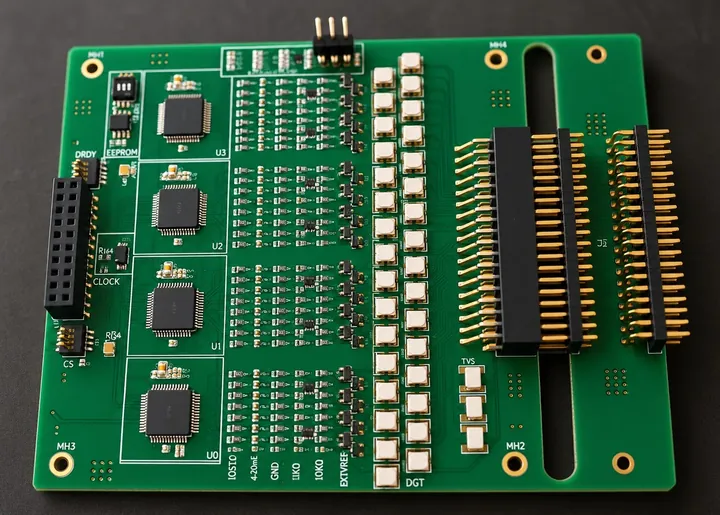
Building the 32-Channel EEG Front End for OpenHuman's OH-EEG-1
How CircuitNexa engineered the acquisition hardware at the center of OpenHuman's open biosignal computing platform.
The challenge
OpenHuman is building OH-EEG-1, a research-grade EEG system designed from the ground up as a computing platform rather than a single-purpose medical instrument. Their goal is physiological signals that are programmable: acquired once, then available to whatever application a researcher, developer, or BCI builder is running, instead of being locked inside one vendor's software.
That starting point put unusual demands on the front-end hardware. It couldn't just acquire clean EEG. It had to do so as a modular, replaceable component inside a larger open architecture: isolated patient-side power and digital domains for safety, onboard storage and battery operation for untethered recording, hardware trigger I/O for time-locking events to real experiments, and a design that keeps working without depending on a live host connection.
What CircuitNexa built
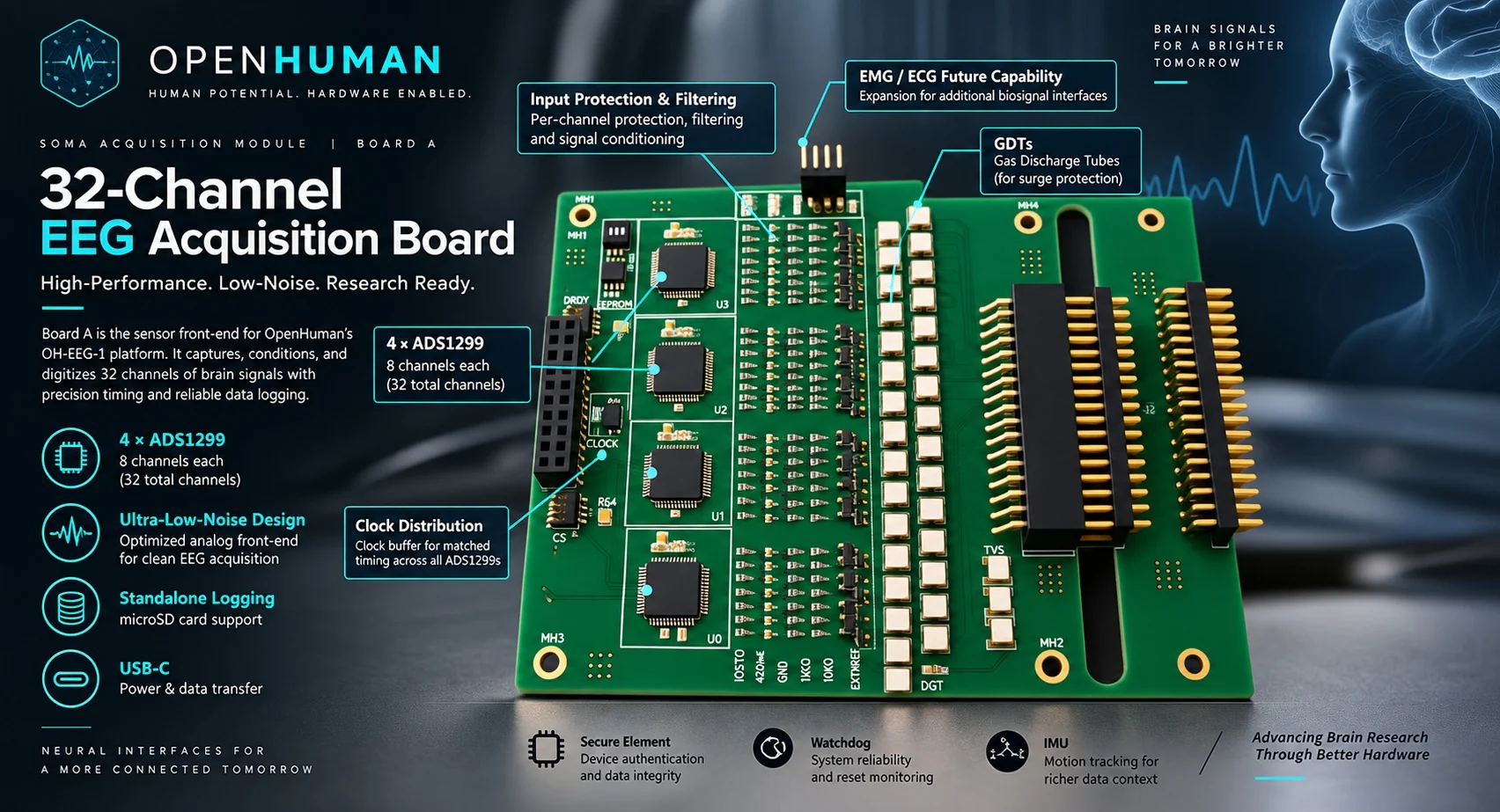
CircuitNexa designed the 32-channel acquisition module, internally referred to as Board A, the electrical front end of OpenHuman's Soma acquisition module. The board is built around four ADS1299 analog front ends, the same class of precision delta-sigma ADC used across serious EEG acquisition hardware, chosen specifically to support 32 simultaneous channels of low-noise neural signal acquisition on a single 8-layer board.
Beyond the analog front end, the design carries the constraints OpenHuman's platform architecture demanded: isolated patient-side power and digital domains, keeping the electrode-facing circuitry electrically separated from the rest of the system; USB-C connectivity and onboard battery management for untethered, mobile operation; local SD storage, so a recording session doesn't depend on a live host connection; eight trigger inputs and eight trigger outputs for hardware-level synchronization with external experiment stimuli, equipment, or annotations; a secure element, watchdog, IMU, and rail monitoring, supporting the platform's broader goals around device integrity and system health reporting; and a replaceable compute-module interface, so the acquisition hardware can pair with different processing modules without a full board redesign.
Where it stands today
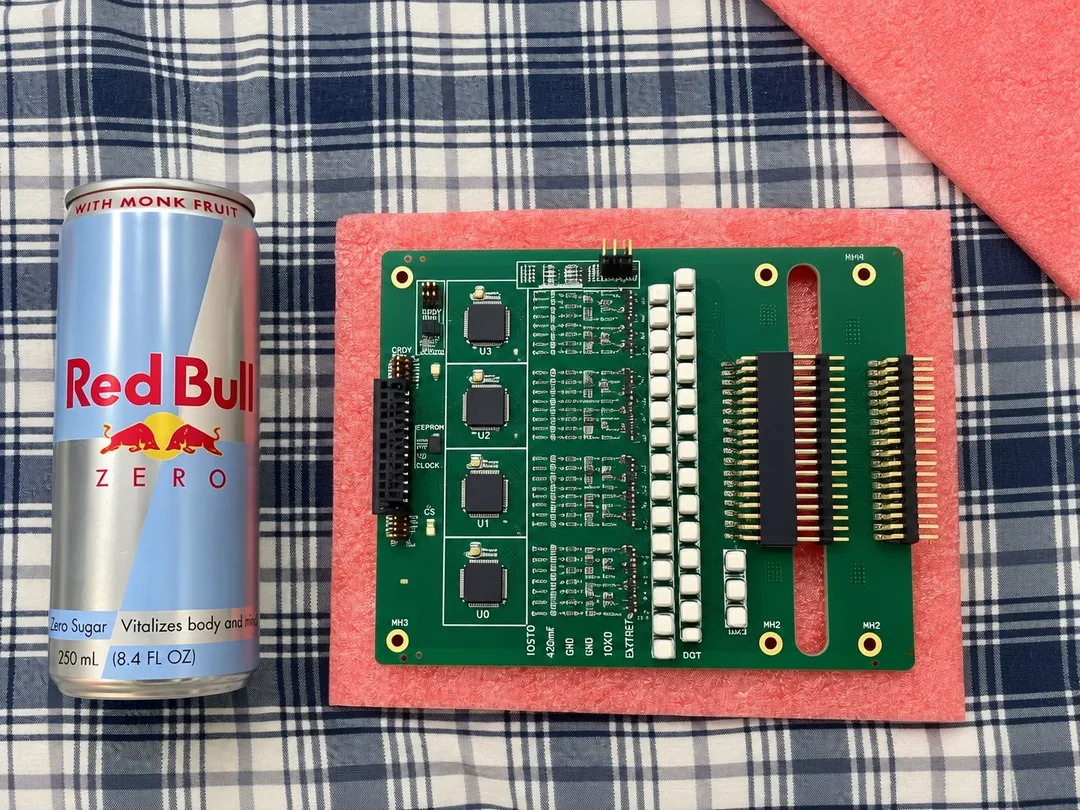
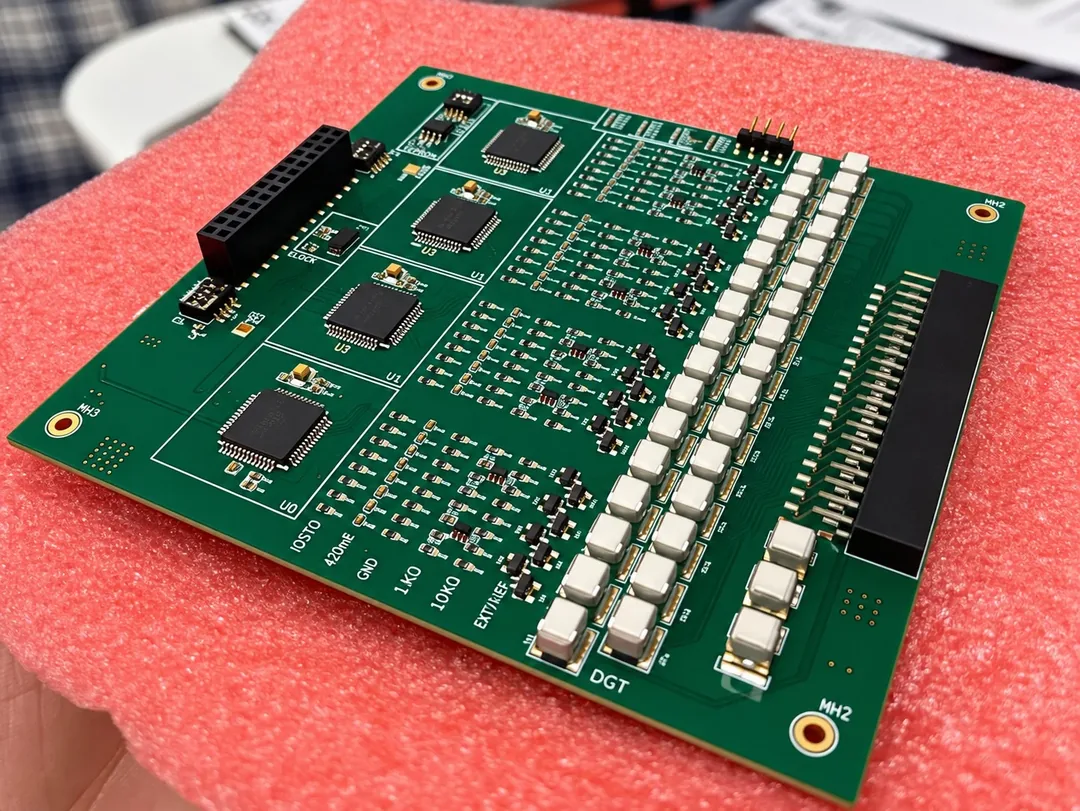
As of this write-up, Board A has been fabricated and is in electrical bring-up, the stage where the board is validated on the bench against its design targets before moving into the verification and turnkey testing OpenHuman needs ahead of its planned evaluation units.
Consistent with OpenHuman's own approach of separating design targets from evidence-backed results, noise, CMRR, and biological-recording performance are OpenHuman's to publish once that verification is complete. This project, like OH-EEG-1 itself, is research and development hardware: not a cleared medical device, and not something either party is presenting as clinically validated at this stage.
What this demonstrates
This project is representative of the kind of biosignal work CircuitNexa takes on: acquisition hardware where the analog front end, the power architecture, and the system-level constraints all have to work together, not just a schematic built in isolation. Multi-channel, low-noise analog design is a small part of a larger discipline that includes isolation, power integrity, storage, and the mechanical and electrical interfaces a platform like OH-EEG-1 depends on.
Working on biosignal or medical hardware?
CircuitNexa helps startups and engineering teams turn electronics concepts into manufacturable hardware.
Talk to CircuitNexa